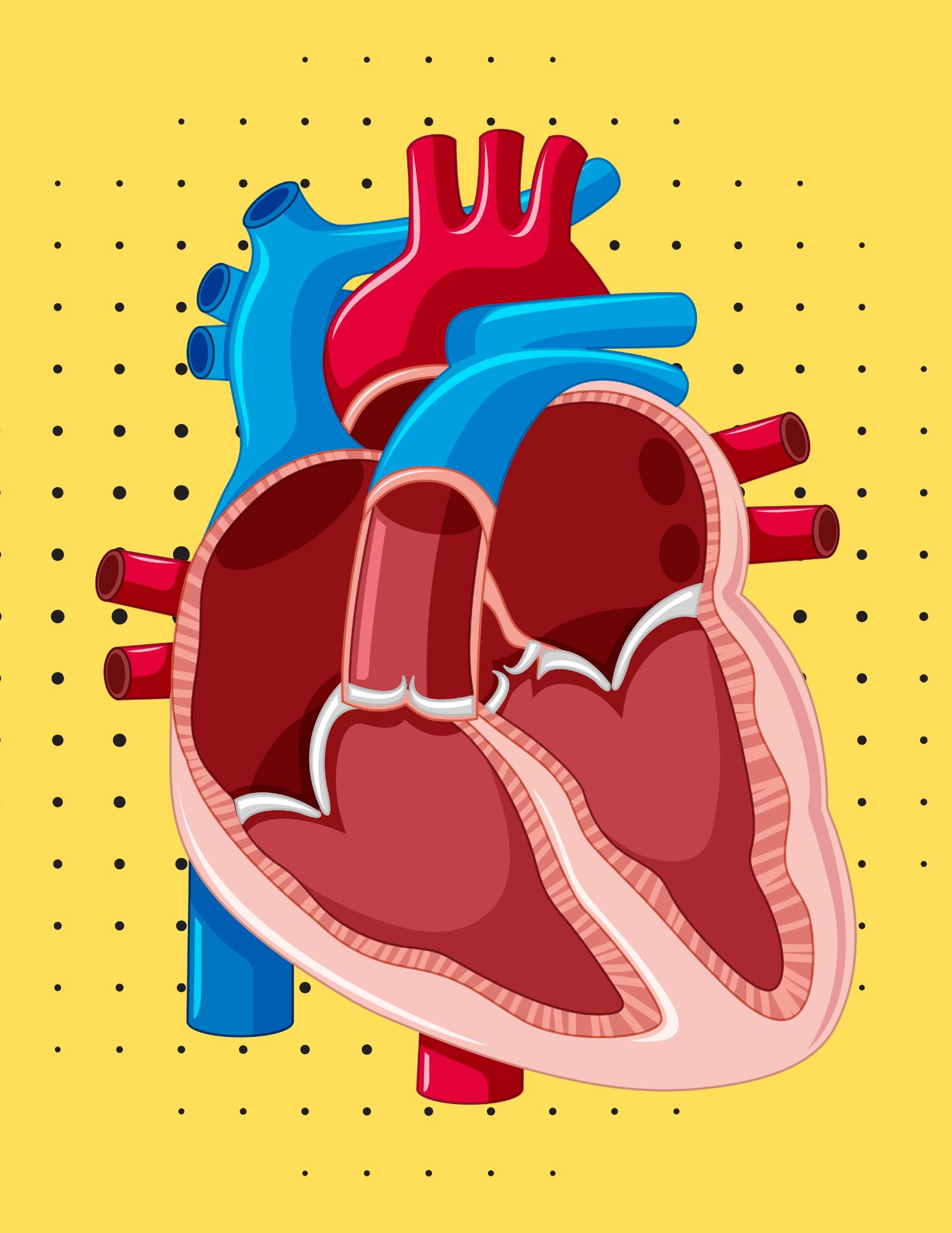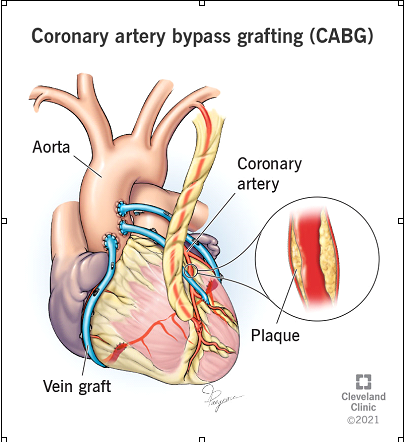
Coronary artery bypass graft (CABG) or often loosely addressed as open heart surgery or bypass surgery is a surgical procedure used to treat blockages of blood vessels around the heart.
New channels are created to bypass the blocked arteries so that the muscles of the heart gets good blood flow and maintain its original functions.
Why it’s carried out.
The heart is a muscle and needs a constant supply of blood. This is supplied by the Right and Left Coronary arteries. These arteries can get clogged thereby reducing the blood supply and causing pain in the chest (angina) or frank heart attack.
While angina can often be treated with medicine, severe angina may require a coronary artery bypass graft to improve the blood supply to the heart.
A coronary artery bypass graft may be recommended to reduce your chances of having a heart attack. It also relieves you of chest pain and overall is like having an insurance for your heart.
If you do not address the blockages in the heart- the muscles in the heart begins to die and the heart function goes down and eventually reduces longevity and quality of life.
.
Recovery.
Most people will have a hospital stay for about 6 to 8 days after having a CABG, follow-up appointment, typically about 2 weeks after your operation.
Everyone recovers at slightly different speeds.
Generally, you should be able to sit in a chair after 1 day, walk after 3 days, and walk up and down stairs after 5 or 6 days.
You should be able to return to most of your normal activities after about 8 weeks, including working, driving and having sex. If you have a heavy manual job, you may need to stay off work longer.
Most people make a full recovery within 12 weeks.
Risks of surgery.
There are risks assosciated with any procedure including CABG- major risk includes risk of CVA while minor risks, such as an irregular heartbeat or a wound infection.
After surgery
After having a coronary artery bypass graft, most people will experience a significant improvement in symptoms such as breathlessness and chest pain, and their heart attack risk will be lowered.
But a coronary artery bypass graft isn’t a cure for coronary heart disease.
If you don’t make lifestyle changes, such as eating a healthy diet and exercising regularly, your grafted arteries will also eventually become hardened and narrowed.
Sometimes, a coronary artery bypass graft may need to be repeated or you may need a procedure to widen your arteries using a small balloon and a tube called a stent (coronary angioplasty).
What happens during this procedure?.
CABG is a complicated procedure that takes several hours to complete (the actual time needed depends on the specific type of CABG surgery, how many bypasses you need, and more). The following steps happen for most of these surgeries.
Anesthesia and life support
Like most major surgeries, the first step to this surgery is to put you into a state of deep sleep. This keeps you from feeling pain during the surgery. It also helps relax you for other steps in the preparation.
Because CABG involves work on your heart, it usually involves multiple types of life support. These include:
⦁ Intubation and ventilation. Intubation is where healthcare providers insert a tube down your throat and into your windpipe. They then attach that tube to a machine called a ventilator, which does the work of breathing for you. Your lungs still process and transfer oxygen into and carbon dioxide out of your bloodstream, but the ventilator makes the air move.
⦁ Intravenous lines. Intravenous (IV) lines are tubes that allow providers to directly infuse medications and fluids into your body through one of your veins.
⦁ Urinary catheter. Before starting surgery, providers will insert a small tube into your urethra until it reaches your bladder. This tube, called a catheter, allows urine to drain through the tube and into a bag. This lets you unconsciously “pee” even when you’re under anesthesia.
⦁ Heart-lung bypass. This machine takes over for your heart and lungs by pumping blood out of your body through an IV line and into this machine, which also adds oxygen and removes carbon dioxide to your blood. The machine then pumps the blood back into your body through an IV line. Using this machine allows providers to temporarily stop your heart, making it easier for them to do some of the surgical work. A heart-lung bypass machine isn’t always necessary for CABG (see the section on variations of this surgery below), but the use of these is common.
Blood vessel harvesting
CABG involves creating a bypass for blood to use to reach blocked areas of your heart. A bypass is like a detour for your blood to use to get around an obstacle. Creating that bypass involves taking a blood vessel from somewhere else in your body, such as your leg, arm or chest, and using it to craft the detour around the blockage. In cases where there’s more than one blocked artery, multiple bypasses may be necessary. These are double (2), triple (3)and quadruple (4) bypasses.
Surgery
To reach your heart to perform the surgery, a cardiothoracic surgeon will make an incision in the center of your chest. They’ll also split your breastbone (sternum) down the middle, then spread and lift your rib cage to make it easier to access your heart.
Once they reach your heart, the surgeon will take the harvested blood vessel and craft the bypass. The upper end (beginning) of the bypass attaches to your aorta, the large artery that carries blood out of your heart and to the rest of your body, just after it exits your heart. The lower end (ending) of the bypass will attach to the blocked artery just past the blockage.
Once the bypass is in place, the surgeon can restart your heart (if they stopped it) and get your blood flowing again. They’ll then lower your rib cage back into place and wire it together so it can heal. They’ll then close the incision in your chest with staples and sutures (stitches).
Variations of this surgery
While CABG tends to use the same techniques in most people, there are instances where different techniques are better for your particular needs. The variations of this surgery include:
⦁ Off-pump CABG. This type of CABG doesn’t use a heart-lung bypass machine. That means the surgeon doesn’t stop your heart during this procedure and does all the work while your heart is still beating. This type of surgery is not for every patient, and it is more challenging for the surgeon. However, some surgeons have special training and experience in performing CABG surgery this way.
⦁ Minimally invasive CABG. This variation of CABG doesn’t use a large incision and splitting/lifting of your sternum and rib cage. Instead, the surgeon uses much smaller incisions and accesses your heart through the gaps between some of your ribs. This version of the procedure may also use the off-pump technique.
⦁ Robot-assisted CABG. Surgical robots are highly advanced machines that a surgeon can use to perform CABG surgery. To do this, a surgeon “drives” the robot, meaning they control the robot’s movements. Robotic surgery uses smaller incisions and doesn’t involve opening and lifting your sternum. Robotic surgery may involve heart-lung bypass, or it may use the off-pump technique.
CABG is often the best choice when a person has multiple blocked arteries in their heart. It’s also a superior procedure for blockages in certain places. Many studies have linked CABG with improved long-term outcomes, including better survival odds. This advantage often grows when used alongside advanced bypass techniques with durable results.
What are the risks or complications of this procedure?
CABG is a major surgery, which means there are some potential risks and complications. While most of these risks and complications are avoidable or treatable, it’s still important to understand them. Possible risks include:
Irregular heart rhythms (arrhythmias). The most common arrhythmia after CABG is ⦁ atrial fibrillation, which causes an increased risk of ⦁ stroke. Fortunately, it’s usually only a temporary concern.
⦁ Bleeding. This is a risk with any major surgery. To avoid this, people who take blood thinners will need to stop taking them (with guidance and monitoring from their healthcare provider) before the surgery.
⦁ Infections. Another possible complication of surgery is infection. When infections spread throughout your body, they can cause ⦁ sepsis, a life-threatening overreaction of your immune system. Sepsis is a medical emergency, and having two or more of its symptoms (fast heart rate, fever, chills, confusion, rapid breathing or confusion) should be considered as dangerous as a heart attack or stroke. Fortunately, major infections after CABG are rare thanks to improved surgical care and techniques.
⦁ Confusion or ⦁ delirium. These cause symptoms like agitation, trouble thinking clearly, memory problems or someone behaving unusually (where they seem like a different person).
⦁ Kidney problems.
⦁ Stroke.
⦁ Heart attack.
What it is ?
Why do we do it?
How does it help?
Does it cure Coronary Artery Ds
Different techniques
Advantage and disadvantage
Main reason for CAD
Role of different medicines
Role of secondary prevention
Secondary prevention after Coronary Artery Bypass Graft (CABG) surgery focuses on preventing future cardiovascular events and maintaining long-term graft patency. Key elements include lifestyle modifications and medications. These measures help slow down the progression of atherosclerosis in both native and grafted vessels.
Lifestyle Modifications:
⦁ Smoking cessation:
Smoking significantly increases the risk of cardiovascular events and should be stopped.
⦁ Heart-healthy diet:
A diet low in saturated and trans fats, cholesterol, and sodium, and rich in fruits, vegetables, and fiber, is recommended.
⦁ Regular exercise:
Aim for at least 30 minutes of moderate-intensity exercise most days of the week.
⦁ Weight management:
Losing weight if overweight or obese can improve cardiovascular health.
⦁ Stress management:
Chronic stress can contribute to cardiovascular disease, so managing stress through relaxation techniques or other methods is important.
Medications:
⦁ Antiplatelet therapy:
Aspirin or other antiplatelet medications are typically recommended to prevent blood clots and maintain graft patency.
⦁ Statins:
Statins are lipid-lowering medications that help reduce cholesterol levels and also have anti-inflammatory properties that may help reduce the risk of atherosclerosis.
⦁ Renin-angiotensin-aldosterone system (RAAS) inhibitors:
These medications, such as ACE inhibitors or ARBs, may be prescribed to help manage blood pressure and protect the heart.
⦁ Beta-blockers:
Beta-blockers may be recommended to help control heart rate and blood pressure, especially for patients with a history of heart attack or heart failure.
Other Important Considerations:
⦁ Cardiac rehabilitation:
Participating in a structured cardiac rehabilitation program can help improve cardiovascular health and reduce the risk of future events.
⦁ Regular monitoring:
Patients should have regular follow-up appointments with their healthcare provider to monitor their progress and adjust their treatment plan as needed.
How is CABG superior to Angioplasty
Use of LIMA RIMA and Radial Artery
Lifestyle modification
Load of CAD in the Indian perspective
MICS
Valve Surgery
Different types of valves
Need for oral anticoagulation – advantages and risks
When to consult an expert
Exercise and Heart Health
Diet for Indians
Myths about Cardiac Surgery